Poster · United Kingdom / United States · 1914, 1917 · World War I
Your Country Needs You!
This gesture was invented in London in 1914, but it became famous in America.
- Themes
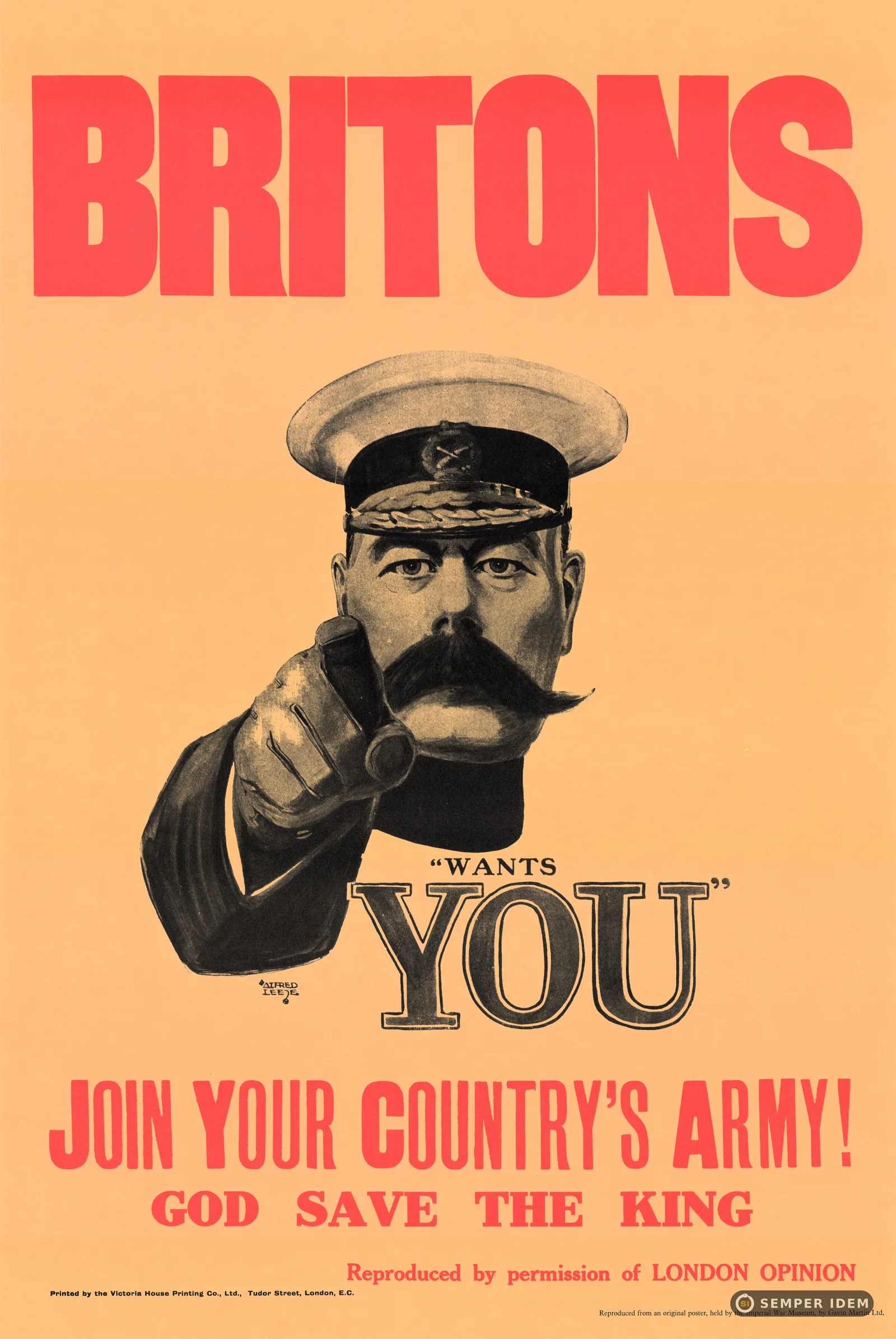
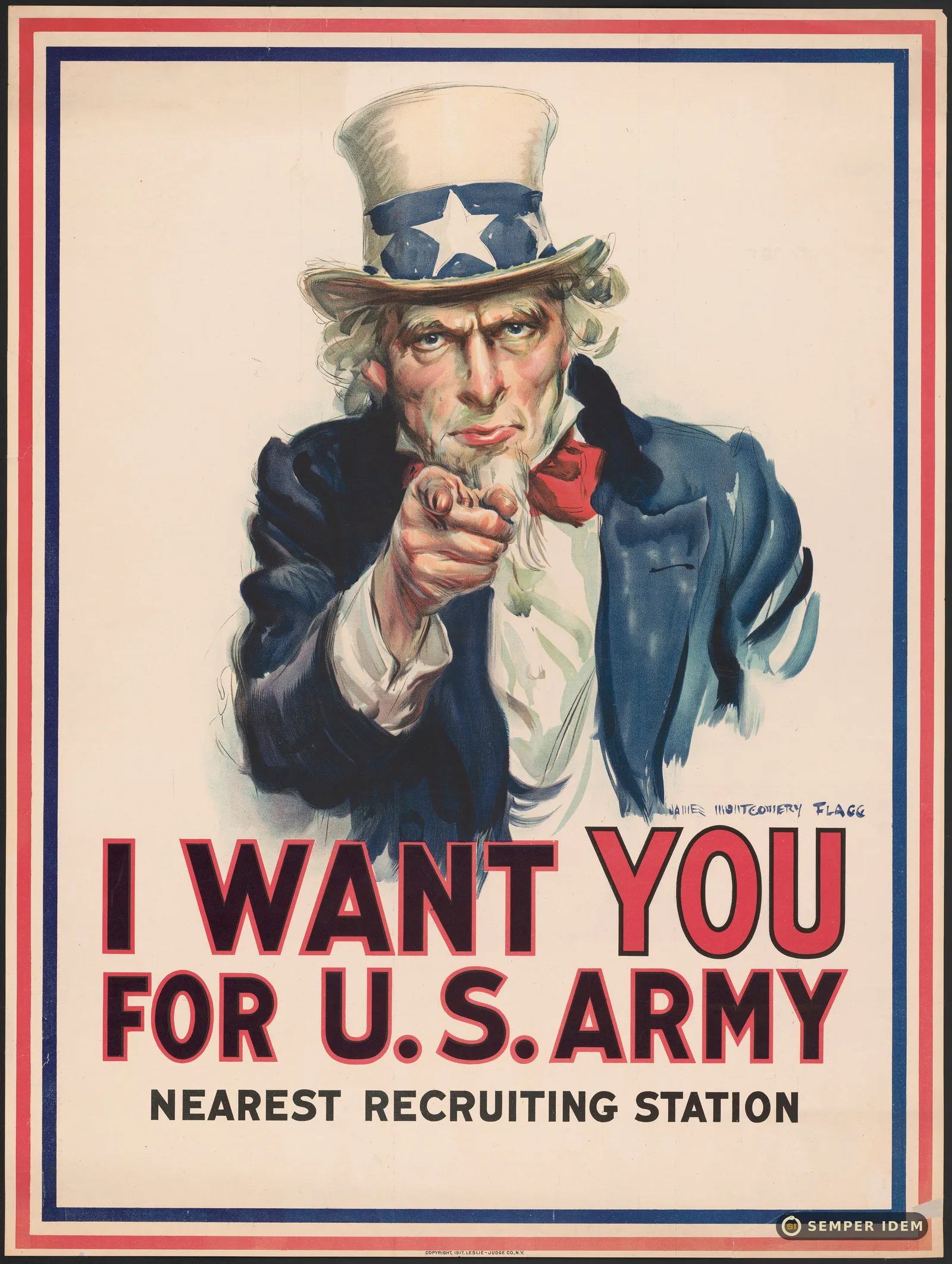
On the British poster the Secretary of State for War, Lord Kitchener, looks straight at the viewer and jabs a finger at him: “[Kitchener] wants you! Join your country’s army!” His name does not appear on the poster — everyone knew the face. On the American one Uncle Sam, in a starred top hat, frowns and points at the viewer: “I want you for U.S. Army.”
Leete’s drawing appeared on 5 September 1914, barely a month into the war, on the cover of London Opinion. Leete himself was a commercial illustrator who drew advertisements for Guinness, Bovril and the London Underground. Britain had no conscription then, and the army relied on volunteers. Flagg first drew his Uncle Sam for the cover of Leslie’s Weekly on 6 July 1916, and when the United States entered the war in 1917 the poster was printed more than four million times. Flagg used himself as the model, to save on a model’s fee, and borrowed the pose from the British Kitchener poster.
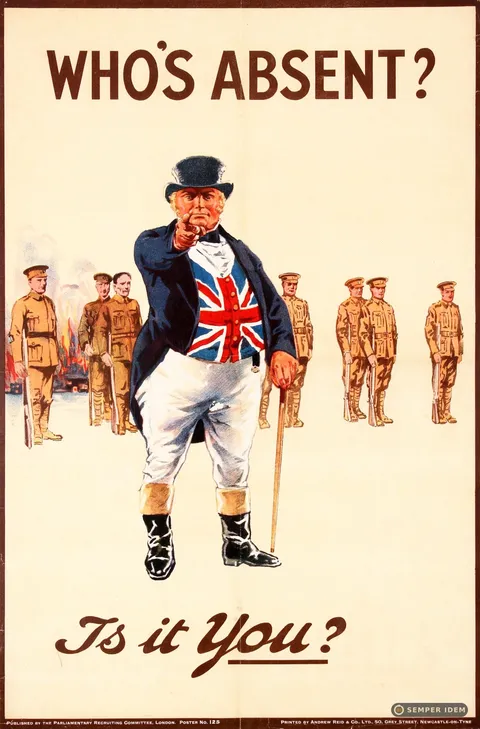
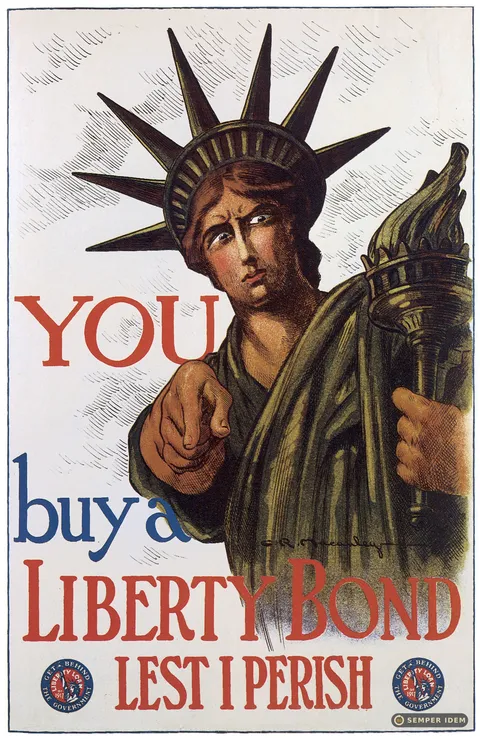
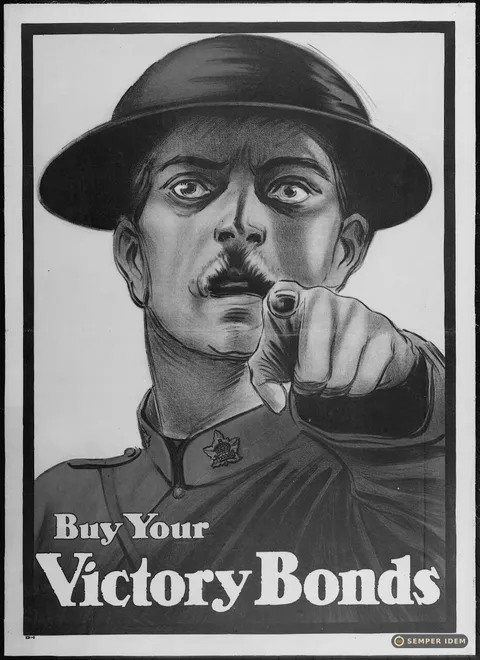
The technique is direct address. The gaze and the finger are aimed at everyone standing in front of the poster: whichever way you approach, you have already been noticed. The abstract state acquires a face, and the appeal becomes a personal question. Yet the fame of Leete’s drawing is largely a later legend. The historian James Taylor found that the most widespread street version of the poster carried neither a design number nor the endorsement of the Parliamentary Recruiting Committee — it was not an official publication. And the Imperial War Museum, acquiring the original artwork in 1917, catalogued it as a poster in error. The image was seen during the war — it appears in a December 1914 photograph of a Liverpool railway station — but it was reprints and textbook covers that made it famous. Its copies did more than the original.
Semper Idem · today’s parallel
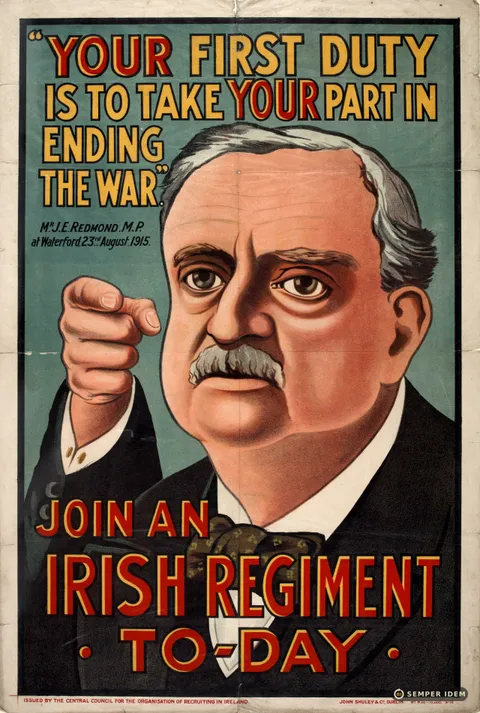
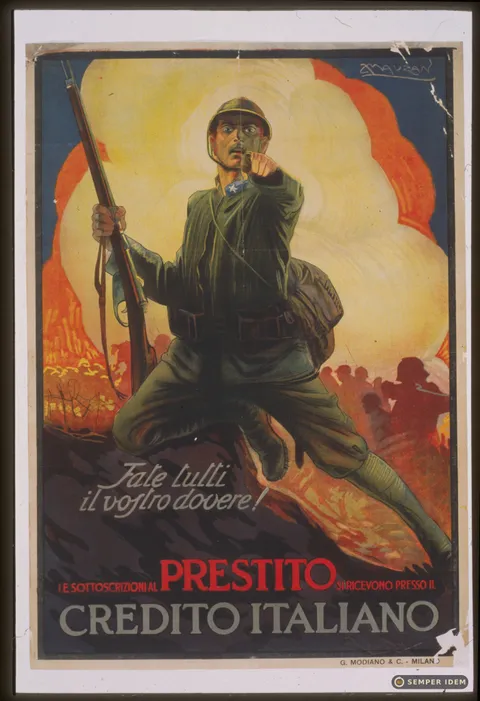
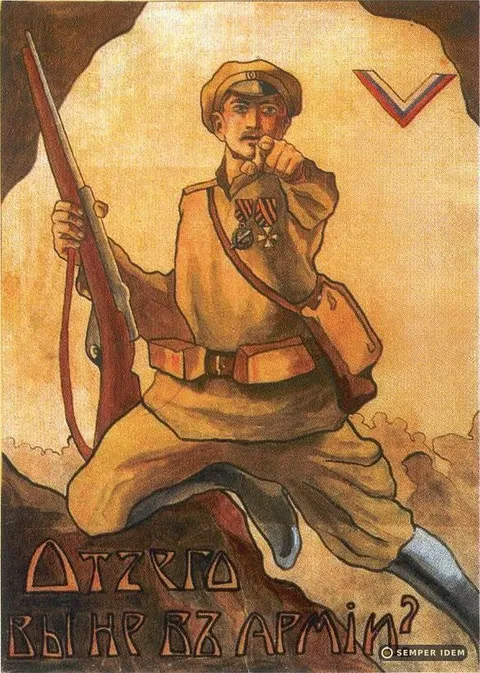
Over the next thirty years the gesture was repeated in Ireland, Italy, Canada, Germany, Spain, Brazil and Armenia. Those posters follow in this series. The technique stays the same; where the finger is calling you is decided each time by whoever drew it.
Context
1) United Kingdom, 1914. Alfred Leete (1882–1933); first a London Opinion cover, 5 September 1914. 2) USA, 1917. James Montgomery Flagg (1877–1960); first a Leslie’s Weekly cover, 6 July 1916; more than 4 million copies printed in 1917–1918.